

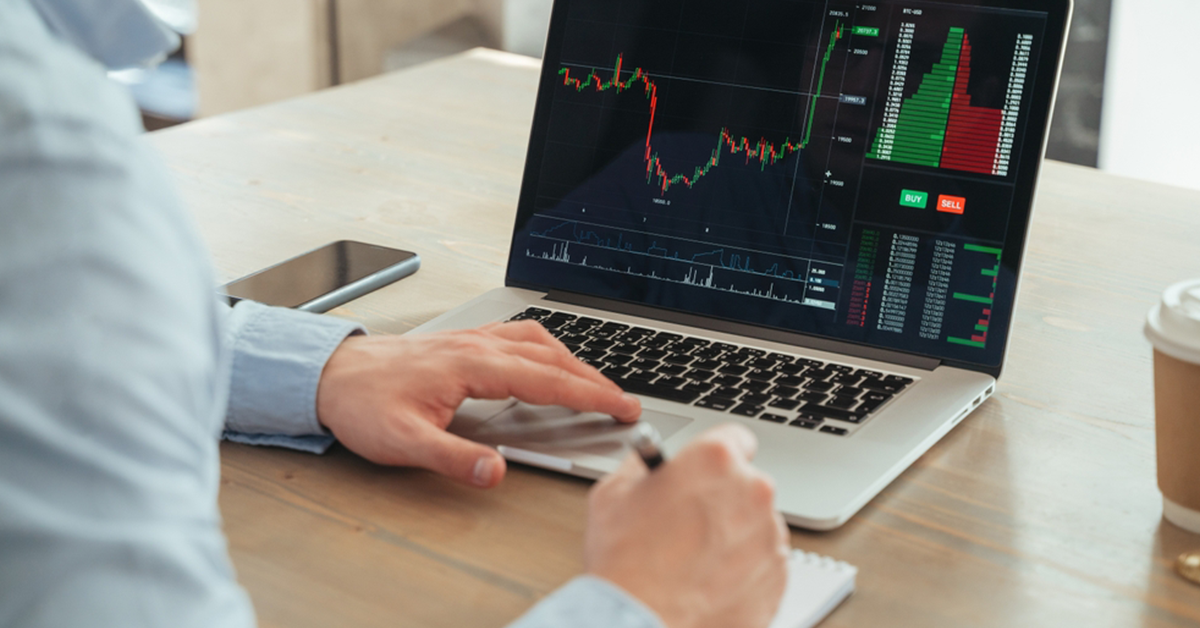

Trading in the foreign exchange market offers incredible flexibility, but it also demands a deep understanding of how capital is allocated. Many retail traders dive in headfirst, seduced by the prospect of controlling large positions with minimal capital. Without a structured defense system, however, the very mechanism that amplifies your potential gains will quickly dismantle your trading account.
What is leverage trading exposure, and why should I care?
To understand your true market vulnerability, you must first ask yourself: what is leverage trading exposure? In simple terms, it is the total nominal value of your open positions compared to the actual cash balance sitting in your account. Using leverage is highly comparable to buying a house with a small down payment; you own the responsibility for the entire property value, not just the deposit.
If you have $1,000 in your account and open a position worth $100,000 using 1:100 leverage, your real market exposure is $100,000. This means a tiny price shift of just 1% in the wrong direction will completely wipe out your entire $1,000 deposit. Managing this exposure is the single most critical factor in determining whether you survive your first year of trading.
How do I calculate my real-time exposure before clicking “buy”?
Calculating exposure is a straightforward mathematical exercise that you must perform before every single trade. To find this number, simply multiply the contract size by the number of lots you plan to trade. For example, one standard lot in forex represents 100,000 units of the base currency.
If you decide to trade two mini-lots (equivalent to 20,000 units), your total market exposure is exactly 20,000 units of that currency. Always keep this total figure in mind, rather than focusing solely on the tiny margin deposit your broker temporarily locks up. If you only look at the margin requirement, you are blindfolding yourself to the actual risk you are taking.
Why does “margin level” act as my account’s early warning system?
Your trading terminal displays several key metrics, but your Margin Level percentage is your ultimate safety gauge. This value represents the ratio of your account equity to your used margin. Think of your margin level like the oil pressure gauge in your car; when it drops too low, catastrophic engine failure is just moments away.
When your margin level falls below 100%, it means your usable capital is entirely depleted. If the market continues to move against you, your broker will eventually trigger a margin call or a stop-out. At this point, they will automatically close your losing positions to prevent your account from falling into a negative balance.
What concrete countermeasures can I use to neutralize leverage risks?
The most effective countermeasure is a strict, non-negotiable stop-loss order placed on every active trade. A stop-loss is your ultimate safety valve, automatically cutting your trade when the market reaches a pre-determined pain threshold.
Additionally, you can protect your account by choosing to work with highly regulated, low spread forex brokers that offer guaranteed stop-loss orders. While normal stop-loss orders can sometimes suffer from execution delays during high-volatility events, a guaranteed stop-loss ensures your trade exits at your exact price. This completely eliminates the threat of unexpected market gaps.
The Professional Risk Limit:
Never expose more than 1% to 2% of your total account equity to a single trade. If your account holds $5,000, your stop-loss should be positioned so that you lose no more than $50 to $100 if the trade fails.
How do I balance multiple open positions without compounding my risk?
A common trap for intermediate traders is opening several trades at once, believing they are diversifying their risk. However, many currency pairs are highly correlated, meaning they move in the exact same direction. For instance, if you buy both EUR/USD and GBP/USD simultaneously, you are effectively doubling your exposure to USD weakness.
To manage this, you must analyze your total aggregated exposure across your entire portfolio. If your active trades are highly correlated, a sudden macroeconomic shift can easily trigger a domino effect, triggering margin calls across all your positions at once. Keep your total combined exposure within conservative limits.
Can I adjust my maximum leverage settings with my broker?
Yes, and you absolutely should if you want to protect yourself from your own trading impulses. Most reputable, customer-focused brokers allow you to manually lower the maximum leverage limit on your account dashboard.
If your broker defaults your account to an extreme ratio like 1:500, you can request to scale it back to a far safer 1:10 or 1:30. This simple adjustment acts as an invisible guardrail. It physically prevents you from opening massive, reckless positions that could destroy your account before you have a chance to react.
Summary
Managing leverage exposure is not about avoiding risk altogether; it is about keeping that risk entirely under your control. By calculating your nominal market exposure before entering a trade, setting strict 1% to 2% risk limits, and utilizing guaranteed stop-loss orders, you turn a highly volatile tool into a structured trading system. Treat leverage with the respect it demands, keep your overall account exposure low, and focus on building steady, consistent progress over the long haul.